

COSMETIC:
(888) 803-3762
MEDICAL:
(519) 836-8558

13
Aug
Laser Skin Treatments in Guelph: Why the Operator Matters
TL;DR: A cosmetic laser is a medical device, but in Ontario no licence is required to point one at the public. Health Canada regulates the machine. Public health inspects the premises for infection control. Nobody examines the skill of the person holding the handpiece unless they already answer to a professional college. The injury data we have (it’s American) tracks operator type closely: 71% of US laser liability claims from 2012 to 2020 involved a non-physician operator, while dermatologists accounted for 3%. Settings, skin-type assessment, and complication management are where outcomes are actually decided. So before you book laser skin treatments in Guelph, ask three things: who assesses you, who sets the parameters, and who takes over if something goes wrong.
Here’s a question I wish every patient asked before a laser touched their face: who, exactly, is operating this machine? Not which brand the clinic bought. Who is holding the handpiece, who chose the settings, and who steps in if healing goes sideways.
The numbers behind my concern are stark. In the most recent review of US laser liability claims, 71% of cases from 2012 to 2020 involved a non-physician operator, while dermatologists accounted for just 3% (Dermatologic Surgery, 2022). That’s US data, and I’ll label it as such throughout. But Ontario gives you a local reason to care: here, remarkably, no licence of any kind is required to operate a cosmetic laser. Lasers are everyday tools in my practice, and I want to show you why the hands matter as much as the hardware.
Key Takeaways
- No licence is required to operate a cosmetic laser in Canada. Health Canada regulates the machine, and operator training is usually left to the manufacturer (CMAJ, 2010).
- US liability reviews found 71% of laser injury claims from 2012-2020 involved a non-physician operator; dermatologists accounted for 3% (Dermatologic Surgery, 2022).
- Complications follow parameters: treatment density, a setting the operator chooses, drove swelling and pigmentation in fractional resurfacing studies (Lasers in Surgery and Medicine, 2007).
- Ontario’s nursing regulator puts it plainly: “clients are entitled to know who is providing their care” (CNO Aesthetic Services guideline, 2026). Ask before you book.
Who Is Allowed to Operate a Cosmetic Laser in Ontario?
Anyone. In Ontario, no licence, certificate, or provincial credential is required to operate a cosmetic laser on the public. Health Canada licenses the machine, not the person: the device is regulated as a product, and operator training is typically left to the manufacturer (CMAJ, 2010). Federal guidance for laser hair removal facilities recommends, but does not require, operator training (Health Canada, 2011). Ontario’s public health units do inspect laser premises, but under the personal service settings regulation (O. Reg. 136/18), which governs infection prevention and sanitation, not laser skill (Ontario public health guidance). And an unregulated aesthetic operator answers to their employer, not to any professional regulator: the College of Nurses of Ontario’s 2026 guideline states that unregulated care providers “are accountable to their employers,” who decide what training is enough (CNO, 2026). Physicians and nurses answer to their colleges. Everyone else answers to whoever owns the clinic.
Does that surprise you? It surprises most people who ask. The person aiming a Class 4 medical device at your face may have learned everything they know at a manufacturer’s training session. That isn’t an accusation against any individual operator; many are conscientious and genuinely skilled. It’s a description of the system. In this province, the training floor sits wherever an employer decides to set it.
Consequently, the usual consumer shortcuts fail here. A clinic can be spotless, pass every public health inspection, and still have nobody on staff trained to recognize when a patient’s skin type and the chosen settings are a dangerous match. Cleanliness is regulated. Judgment isn’t.
What Does the US Injury Data Show About Laser Operators?
When laser treatments end up in court, a non-physician was usually operating. Across 69 US liability claims from 2012 to 2020, 71% involved a non-physician operator, and dermatologists accounted for 3% (Dermatologic Surgery, 2022). Laser hair removal made up 64% of the litigated procedures, and 53% of decided cases went the patient’s way.
The trend matters as much as the snapshot. An earlier JAMA Dermatology analysis found the non-physician share of US laser lawsuits climbed from 36.3% in 2008 to 77.8% in 2011 (JAMA Dermatology, 2014). And the disproportion is the striking part: non-physicians perform about one-third of laser hair removal in the US, yet they drew 85.7% of the hair-removal lawsuits filed from 2008 to 2012 (UCLA Newsroom, 2014).
So is this just an American litigation story? Partly, and I want to be careful with it. Lawsuits undercount injuries, legal cultures differ, and Canada publishes no comparable numbers. But notice why Canada has no numbers: when no regulator tracks who operates cosmetic lasers, nobody counts their complications either.
Survey data adds a signal, with a disclosure attached. In a US consumer survey funded by a dermatology specialty society (read it as self-reported experience, not incidence), burns made up 34.8% of reported adverse events among respondents treated by non-physician operators, versus 7.4% among the physician-treated (JCAD, 2019). To be fair, physician-treated respondents reported complications too. In my experience, no energy device offers zero risk in anyone’s hands, and I’d be wary of a clinic that implies otherwise.
Why Are Laser Settings a Medical Decision?
Because the numbers the operator dials in decide the biology. In fractional resurfacing studies of Asian skin, treatment density, not just energy, drove prolonged swelling and post-treatment darkening; the researchers concluded that “by using adequate parameters, the risk of PIH in dark-skinned patients can be significantly reduced” (Lasers in Surgery and Medicine, 2007; companion study, 2007).
A few definitions make that concrete:
- Fluence is the energy the laser delivers per unit of skin.
- Treatment density is how much of the skin’s surface gets covered in a pass.
- Post-inflammatory hyperpigmentation (PIH) is the stubborn darkening injured skin can develop, and it’s the complication that aggressive settings invite.
Risk isn’t evenly distributed, either. Dyspigmentation is most likely in Fitzpatrick skin types III to VI, the medium-to-deep tones, and it falls with careful parameter selection, fractionation, cooling, and sun avoidance (StatPearls, 2026). The same reference is blunt about the setting: lasers “should be performed only by trained professionals in appropriate medical settings.”
What about prep creams? Here’s an honest negative finding. In the only randomized trial to test it, 100 resurfacing patients used hydroquinone or tretinoin beforehand, and the pre-treated groups developed post-laser hyperpigmentation at the same rate as controls (Dermatologic Surgery, 1999). Prevention doesn’t come out of a tube. It comes from matching parameters to an accurately assessed skin type, and that’s a clinical judgment, not a factory preset.
In my practice, that assessment happens before we ever pick a device: ablative eCO2 laser resurfacing, a gentler Erbium YAG Pixel approach, or vascular and pigment work with the DyeVL photofacial. If you want the full decision tree, our resurfacing comparison guide maps it, and our acne scar treatment guide shows how scar type changes the plan again.
What Happens When a Laser Treatment Goes Wrong?
Complications are managed with medicine, and much of that medicine is prescription-only. The clearest example is antiviral prophylaxis: before ablative resurfacing, the standard of care is prescription valacyclovir started the day before treatment, even in patients with no cold-sore history (StatPearls, 2026). In a randomized trial of 120 resurfacing patients on that prophylaxis, zero herpes outbreaks occurred (Beeson & Rachel, 2002).
Contrast the era before that protocol existed. An earlier 500-patient resurfacing series reported infection in 7.4% of cases (Nanni & Alster, 1998). Different patients and different protocols, so it isn’t a head-to-head comparison. Still, the direction is hard to miss: prophylaxis works. And in Canada, valacyclovir requires a prescriber. A clinic with no physician involved can’t start that medication, and can’t rescue a brewing complication with one either.
Newer device categories deserve the same respect. Health Canada’s January 2026 Health Product InfoWatch flagged radiofrequency microneedling devices for continued vigilance, citing reports of burns, scarring, and nerve damage drawn from a US FDA communication (Health Canada, 2026). That’s a monitoring notice, not a recall, and these remain valuable tools; Morpheus8 is the best-known example of the category. The point is the posture. Energy devices are medical devices, and Health Canada watches them accordingly.
The specialty’s own consensus says the quiet part clearly. Leading laser dermatologists have written that even trained non-physician personnel should use lasers only “in the context of adequate physician oversight,” ideally with direct on-site supervision (Skin Therapy Letter). In our Guelph clinic, we’ve found the oversight question is the one patients ask least and need most.
How Do You Choose a Laser Clinic in Guelph?
Start from the principle Ontario’s nursing regulator published in June 2026: “clients are entitled to know who is providing their care” (CNO Aesthetic Services guideline, 2026). Transparency isn’t a given, though. In one US survey of 127 med-spas in a single metro area, a supervising physician was not on-site at a large majority of them (81.1%), and only about two-thirds told patients who would actually perform the procedure (Dermatologic Surgery, via Medscape, 2023).
Ontario has no equivalent published survey. So the questions are yours to ask, anywhere you go:
- Who assesses me before treatment? Which credentialed professional reviews your skin type, medications, and history?
- Who sets the parameters? Ask how settings are chosen for your Fitzpatrick type, and by whom.
- Is a physician on-site during treatments?
- Who manages complications? If you blister or pigment next week, who sees you, and can they prescribe?
- Has this operator treated skin like mine, with this device, before?
And here’s how we’re set up, stated as fact rather than sales copy. deRMA Skin Institute is a dermatologist-led clinic: a physician assesses every laser candidate, sets the treatment parameters for that person’s skin, and manages complications directly, including prescriptions when they’re needed. My credentials and research background are public, and I’d encourage you to look up the equivalent page for any clinic you’re considering. That model covers our full laser and light menu, from laser hair removal to fractional resurfacing.
Frequently Asked Questions
Do laser technicians need a licence in Ontario?
No. Canada requires no licence to operate a cosmetic laser; Health Canada regulates the device itself, and training is usually left to the manufacturer (CMAJ, 2010). Ontario’s public health units inspect laser premises for infection control under O. Reg. 136/18, not for laser competence (Ontario public health guidance).
Are laser skin treatments safe?
Properly matched to your skin, yes, with real but manageable risks. Complication reviews find dyspigmentation risk is highest in Fitzpatrick types III-VI and falls with correct parameters, cooling, and sun avoidance (StatPearls, 2026). Nobody offers zero risk: in US survey data, physician-treated patients reported adverse events too (JCAD, 2019).
Why does the operator matter more than the laser brand?
Because outcomes track judgment, not hardware. In fractional resurfacing research, treatment density, a setting the operator chooses, drove swelling and post-laser pigmentation (Lasers in Surgery and Medicine, 2007). And in US liability data, 71% of 2012-2020 laser injury claims involved non-physician operators (Dermatologic Surgery, 2022).
Is laser hair removal high-risk?
It’s routine when skin type and settings are matched, yet it’s the most litigated laser procedure in US data: 64% of claims from 2012 to 2020 (Dermatologic Surgery, 2022). Non-physicians perform about one-third of US laser hair removal but drew 85.7% of related lawsuits from 2008-2012 (UCLA Newsroom, 2014).
What should I ask before booking laser skin treatments in Guelph?
Start with Ontario’s own consumer-transparency principle: “clients are entitled to know who is providing their care” (CNO, 2026). Then ask who assesses your skin, who sets the parameters for your skin type, whether a physician is on-site, and who manages complications, including prescriptions, if healing goes sideways.
Ready to talk specifics? If you’d like a physician-assessed laser plan, request a consultation at our Guelph clinic, and bring your questions, including the hard ones about operators and oversight. You’re entitled to the answers. Not sure which technology fits your goals? Our short laser treatment quiz is a sensible place to start.
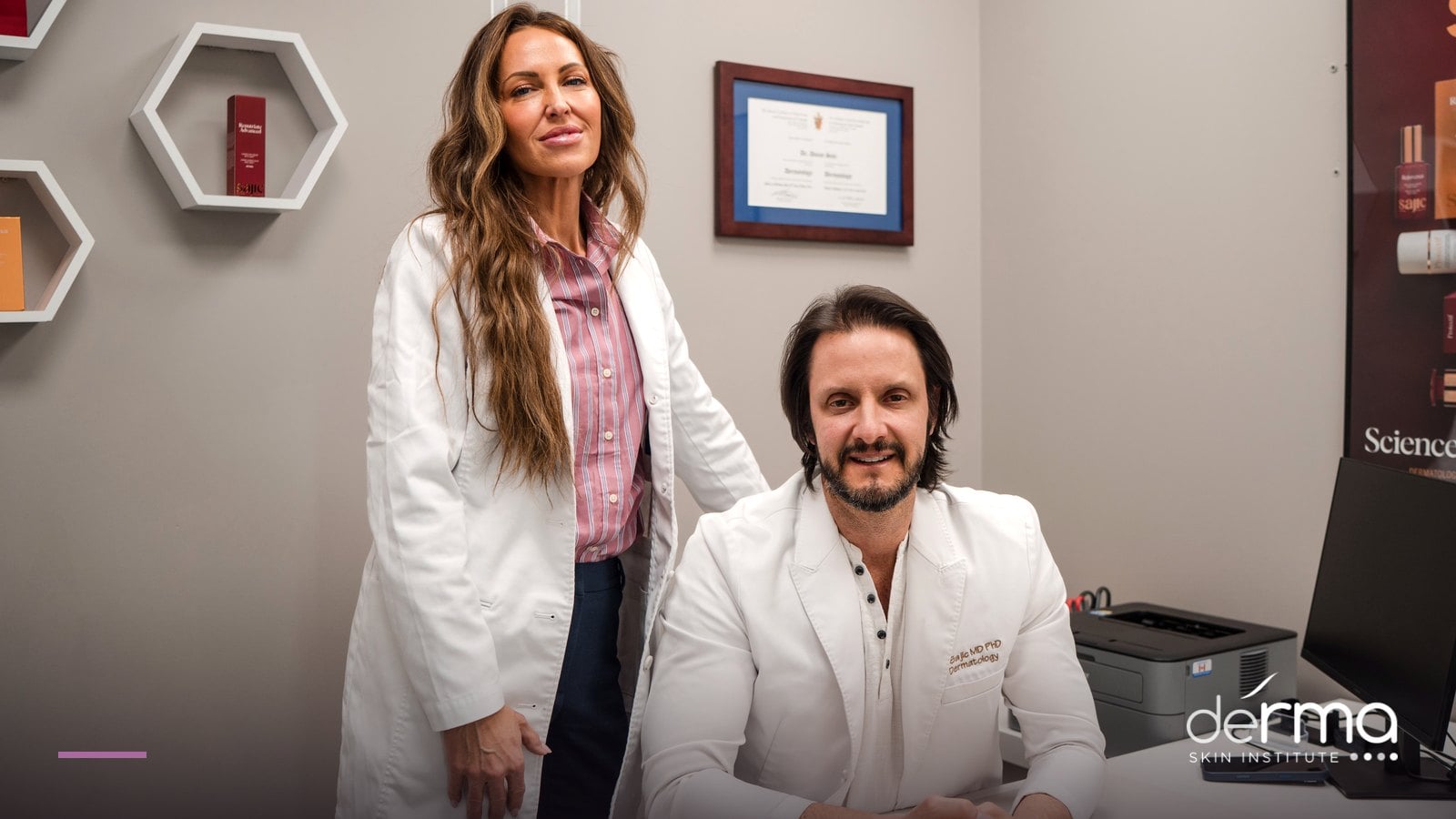
Medically reviewed by Dr. Dusan Sajic, MD, PhD — dermatologist, deRMA Skin Institute, Guelph, ON.
Sources
1. Kelsall D, editorial on cosmetic laser regulation and operator training in Canada, CMAJ, 2010, https://pmc.ncbi.nlm.nih.gov/articles/PMC2871192/ 2. Health Canada, Laser Hair Removal: Safety Guidelines for Facility Owners and Operators, 2011, https://www.canada.ca/en/health-canada/services/environmental-workplace-health/reports-publications/radiation/laser-hair-removal-safety-guidelines-facility-owners-operators-health-canada-2011.html 3. Ontario Regulation 136/18 (Personal Service Settings), public health unit guidance for service providers, https://healthunit.org/health-information/beauty-body-art/information-for-service-providers/ontario-regulation-136-18/ 4. College of Nurses of Ontario, Practice Guideline: Aesthetic Services, June 2026, https://www.cno.org/Assets/CNO/Documents/Standard-and-Learning/Practice-Standards/practice-guideline-aesthetic-services-en.pdf 5. Khalifian et al., liability claims involving laser and energy devices, 2012-2020 update, Dermatologic Surgery, 2022, https://pubmed.ncbi.nlm.nih.gov/35013046/ 6. Jalian et al., increased litigation associated with laser surgery by non-physician operators, JAMA Dermatology, 2014, https://pubmed.ncbi.nlm.nih.gov/24132614/ 7. UCLA Newsroom, release on rising laser-surgery lawsuits and non-physician operators, 2014, https://newsroom.ucla.edu/releases/lawsuits-increasing-over-skin-248934 8. US consumer survey of laser hair removal adverse events (specialty-society funded), Journal of Clinical and Aesthetic Dermatology, 2019, https://pmc.ncbi.nlm.nih.gov/articles/PMC6450566/ 9. “Who Is Holding the Syringe?” med-spa supervision survey, Dermatologic Surgery, 2023, via Medscape, https://www.medscape.com/viewarticle/whos-behind-cosmetic-procedures-medspas-2024a1000f5h 10. Kono et al., treatment density and complications in fractional resurfacing of Asian skin, Lasers in Surgery and Medicine, 2007, https://onlinelibrary.wiley.com/doi/abs/10.1002/lsm.20484 11. Chan et al., fractional resurfacing parameters and PIH in Asian skin, Lasers in Surgery and Medicine, 2007, https://onlinelibrary.wiley.com/doi/abs/10.1002/lsm.20512 12. StatPearls, Laser Complications (updated 2026), NCBI Bookshelf, https://www.ncbi.nlm.nih.gov/books/NBK532248/ 13. West TB, Alster TS, randomized trial of pre-treatment hydroquinone/tretinoin before laser resurfacing, 1999, https://pubmed.ncbi.nlm.nih.gov/9935086/ 14. Beeson WH, Rachel JD, randomized trial of valacyclovir prophylaxis in 120 laser resurfacing patients, 2002, https://pubmed.ncbi.nlm.nih.gov/11966791/ 15. Nanni CA, Alster TS, complications in a 500-patient laser resurfacing series, 1998, https://pubmed.ncbi.nlm.nih.gov/9537005/ 16. Health Canada, Health Product InfoWatch, January 2026 (radiofrequency microneedling devices), https://www.canada.ca/en/health-canada/services/drugs-health-products/medeffect-canada/health-product-infowatch/january-2026.html 17. Alam M, Dover JS, Arndt KA, cutaneous laser training and delegation, Skin Therapy Letter, https://www.skintherapyletter.com/dermatology/cutaneous-lasers-training-delegation/
Dusan Sajic, MD, PhD
Richard Backstein, MD
Sonja Sajic, CCPA

Toni Alberto, CCPA
With more than 20 years of experience, deRMA Skin Institute strive to offer patients the most advanced treatments available to keep their skin healthy and looking its best. Board Certified Dermatologist, Dusan Sajic, MD, PhD, board-certified Plastic and Reconstructive Surgeon, Richard Backstein, MD, FRCSC, Sonja Sajic, CCPA, and Toni Alberto CCPA are committed to providing state-of-the-art medical, surgical and cosmetic treatments to all patients in Guelph, Cambridge, Kitchener, Hamilton, Milton, and surrounding areas.
Contact Us
Fields marked * are required
If you are an existing patient inquiring about appointments and services, please contact
Guelph Cosmetic Department: (888) 803-3762 cosmetic@dermaskininstitute.com
Guelph Medical Department: (519) 836-8558 patientcare@dermaskininstitute.com