

COSMETIC:
(888) 803-3762
MEDICAL:
(519) 836-8558

29
Sep
Rosacea Treatment in Guelph: What Actually Works
TL;DR: Rosacea doesn’t clear on its own, and untreated it can worsen over time. Effective care follows a ladder: trigger control and daily sun protection first, then prescription topicals like ivermectin, azelaic acid, or metronidazole, then low-dose doxycycline for moderate to severe cases, then light-based treatment for the background redness creams can’t reach. Every prescription step requires medical assessment first. Mention your eyes too; ocular involvement is common and badly underdiagnosed. Start with a diagnosis, not another serum.
Rosacea affects more than 3 million Canadians (Canadian Dermatology Association). Yet when a US patient organization surveyed its members, 95% said they knew little or nothing about the condition before their diagnosis (National Rosacea Society, 2014). A common disease with near-zero public understanding. That gap is why I wrote this guide. In my practice in Guelph, rosacea is one of the conditions I see most, and one of the most mistreated by the time patients reach me. Years of “redness serums,” harsh scrubs, and guesswork. So let’s do this properly. Here’s the treatment ladder I actually use, with the evidence behind each rung.
Key Takeaways
- Rosacea affects more than 3 million Canadians and does not resolve on its own (Canadian Dermatology Association).
- Globally, about 5.46% of people have rosacea, women more often than men, peaking between ages 45 and 60 (Gether et al., 2018).
- Prescription topicals work: ivermectin 1% cut inflammatory lesions by 83.0% at 16 weeks in a manufacturer-sponsored trial (Taieb et al., 2015).
- Ocular involvement appears in 44.3% of skin-rosacea patients, yet only 10.3% carry the diagnosis (Kirkpatrick et al., 2025).
What Is Rosacea and Who Gets It?
Rosacea is a chronic inflammatory skin condition that causes facial redness, flushing, visible vessels, and acne-like bumps. It’s common worldwide: a meta-analysis covering 26.5 million individuals found a global prevalence of 5.46% (95% CI 4.91-6.04), with women at 5.41% versus 3.90% for men, peaking between ages 45 and 60 (Gether et al., 2018).
Those are global figures. Here at home, the Canadian Dermatology Association counts more than 3 million Canadians affected. The classic picture is a fair-skinned adult whose flushing lingers a little longer each year and whose skin stings with ordinary products. However, rosacea occurs across skin tones; it’s simply missed more often in deeper ones. It also shows up in several patterns: background redness, inflammatory bumps, thickened skin, and eye involvement. Not sure this describes you? Our rosacea overview walks through the signs in detail.
Why Shouldn’t You Wait for It to Fade?
Because it won’t. The Canadian Dermatology Association states plainly that rosacea does not resolve on its own and that untreated rosacea can worsen over time (CDA). For the more than 3 million Canadians affected, waiting is a strategy with no upside.
However, “worsen” looks different for everyone. In some longstanding untreated cases, the skin gradually thickens, most visibly on the nose. I won’t attach a percentage to that risk, because reliable long-term numbers don’t exist, and I’d rather tell you that than invent one. What I can say from clinic experience: redness that’s been established for years responds more slowly than redness treated early. Still debating whether your face “counts” as a medical concern? My guide on when to see a dermatologist can help you decide.
What Triggers Rosacea Flares?
Sun tops every trigger list. In a US patient-organization survey (patient experience, not clinical evidence), sun exposure triggered flares for 81% of respondents, emotional stress for 79%, and hot weather for 75% (National Rosacea Society, 2002). Those numbers match what I hear in clinic almost word for word.
The common culprits:
- Sun, heat, and humidity (saunas and hot yoga included)
- Emotional stress and intense exercise
- Alcohol, especially red wine
- Spicy food and hot drinks
- Harsh skincare: scrubs, alcohol-based toners, strong fragrance
Consequently, step one of treatment is unglamorous: a daily broad-spectrum sunscreen your skin tolerates, plus a two-week flare diary to find your personal pattern. Boring? Maybe. But every later rung of the ladder works better on protected, calm skin.
Which Prescription Treatments Actually Work?
Prescription topicals are the workhorses of rosacea care. In a 16-week randomized head-to-head trial, ivermectin 1% cream reduced inflammatory lesions by 83.0% versus 73.7% for metronidazole 0.75% (Taieb et al., 2015). Worth knowing: that trial was sponsored by the manufacturer, Galderma, so I weigh it alongside the rest of the evidence rather than in isolation.
What are the topical options?
All of these are prescription treatments requiring medical assessment; which one fits depends on your pattern, skin sensitivity, and history. Ivermectin 1% posted the 83.0% figure above. Azelaic acid 15% reduced lesions by 58% and 51% in two phase III trials, versus 40% and 39% for the vehicle gel alone (Thiboutot et al., 200300405-5/pdf)). Metronidazole 0.75%, the long-serving comparator, delivered 73.7% in the head-to-head. For instance, I often lean toward ivermectin when bumps dominate and azelaic acid when sensitivity is the bigger issue.
When does low-dose doxycycline make sense?
For moderate to severe inflammatory rosacea. Doxycycline 40 mg modified-release is a deliberately sub-antimicrobial dose that works as an anti-inflammatory, not as an antibiotic. In two placebo-controlled trials, inflammatory lesion counts fell by 11.8 versus 5.9 with placebo, and by 9.5 versus 4.3, both p < .001 (Del Rosso et al., 2007). Meanwhile, the low dose limits antibiotic-resistance pressure, which matters to me as a physician. This is a prescription treatment requiring medical assessment, including a review of your medications and history.
Can Light-Based Treatment Fix Background Redness?
Often, yes, with honest caveats attached. In a small uncontrolled study of 34 patients, intense pulsed light reduced cheek redness by 39% after four treatments, and the improvement held at six months (Papageorgiou et al., 2008). Small study, no control group; I present it as promising, not proven.
Creams and pills calm bumps and flushing, but they do little for fixed background redness and visible vessels. That’s where vascular light devices earn their place, and it’s why they sit last on the ladder rather than first. In our clinic, the DyeVL photofacial fills this role. However, a proper medical dermatology assessment comes before any device, because not all facial redness is rosacea, and treating the wrong diagnosis helps no one.
Does Rosacea Affect Your Eyes Too?
Far more often than it gets diagnosed. In a 2025 Canadian study from Queen’s University, only 10.3% of cutaneous rosacea patients carried an ocular rosacea diagnosis, yet ocular involvement was actually present in 44.3% (Kirkpatrick et al., 2025). That’s a more than fourfold gap.
Ocular rosacea is inflammation of the eyelids and eye surface driven by the same disease process. Gritty, burning, or dry eyes, crusty lash lines, and recurring styes are the usual clues, and patients almost never connect them to their skin. Consequently, I ask about eyes at every rosacea visit, and you should raise yours even if nobody asks. Persistent eye symptoms may also mean coordinated care with your optometrist or ophthalmologist.
FAQ: Rosacea Questions I Hear Every Week
Rosacea touches roughly 5.46% of people worldwide (Gether et al., 2018), so these questions come up in my clinic daily. Short, honest answers below.
Can rosacea be cured?
No, and be wary of anyone promising a cure. It’s a chronic condition that can be controlled well. The Canadian Dermatology Association notes rosacea does not resolve on its own and can worsen untreated (CDA), a reality for over 3 million Canadians. Control, not cure, is the honest goal.
What’s the first-line rosacea treatment?
Trigger management plus daily sun protection, then prescription topicals. Ivermectin 1% led its head-to-head trial with an 83.0% lesion reduction at 16 weeks, versus 73.7% for metronidazole, in a manufacturer-sponsored study (Taieb et al., 2015). Every topical option is a prescription treatment requiring medical assessment.
Is low-dose doxycycline just a regular antibiotic?
No. The 40 mg modified-release form is sub-antimicrobial and works as an anti-inflammatory. In placebo-controlled trials, lesion counts fell 11.8 versus 5.9 and 9.5 versus 4.3, both p < .001 (Del Rosso et al., 2007). It remains a prescription treatment requiring medical assessment.
Who gets rosacea most often?
Globally, women more than men, 5.41% versus 3.90%, with prevalence peaking between ages 45 and 60 (Gether et al., 2018). However, rosacea appears across ages and skin tones. Fair skin makes redness easier to see; it isn’t the only place rosacea happens. Persistent facial redness deserves assessment.
How many light treatments does redness take?
Published data offers one anchor: a 39% redness reduction after four IPL treatments, sustained at six months, in a small uncontrolled study of 34 patients (Papageorgiou et al., 2008). In practice, the number varies with your redness, skin tone, and response. Assessment comes first.
Ready to Take Your Redness Seriously?
One number sums up why guessing fails: ocular involvement was present in 44.3% of skin-rosacea patients, yet only 10.3% had the diagnosis (Kirkpatrick et al., 2025). Gaps like that close when the whole picture gets examined properly.
If your face flushes, stings, or stays red no matter what you buy, stop guessing. Request a consultation with our Guelph clinic, and we’ll build a stepwise plan matched to your rosacea, your triggers, and your skin.
Medically reviewed by Dr. Dusan Sajic, MD, PhD – dermatologist, deRMA Skin Institute, Guelph, ON.
Sources
1. Canadian Dermatology Association. Rosacea. https://dermatology.ca/public-patients/diseases-conditions/skin-conditions/rosacea/ 2. Gether L, et al. Incidence and prevalence of rosacea: a systematic review and meta-analysis. British Journal of Dermatology, 2018. https://academic.oup.com/bjd/article-abstract/179/2/282/6730927 3. Kirkpatrick et al. Ocular involvement in cutaneous rosacea, Queen’s University. Canadian Journal of Ophthalmology, 2025. https://pubmed.ncbi.nlm.nih.gov/40373823/ 4. Taieb A, et al. Ivermectin 1% cream versus metronidazole 0.75% cream in inflammatory rosacea (ATTRACT trial, Galderma-sponsored). British Journal of Dermatology, 2015. https://pubmed.ncbi.nlm.nih.gov/25228137/ 5. Thiboutot D, et al. Azelaic acid 15% gel for papulopustular rosacea, two phase III trials. Journal of the American Academy of Dermatology, 2003. https://www.jaad.org/article/S0190-9622(03)00405-5/pdf 6. Del Rosso JQ, et al. Anti-inflammatory dose doxycycline 40 mg modified-release for rosacea, two placebo-controlled trials. Journal of the American Academy of Dermatology, 2007. https://pubmed.ncbi.nlm.nih.gov/17367893/ 7. Papageorgiou P, et al. Treatment of rosacea with intense pulsed light. British Journal of Dermatology, 2008. https://pubmed.ncbi.nlm.nih.gov/18565174/ 8. National Rosacea Society. Patient survey on rosacea trigger factors, 2002. https://www.rosacea.org/rosacea-review/2002/summer/new-survey-pinpoints-leading-factors-that-trigger-symptoms 9. National Rosacea Society. Rosacea awareness patient survey, 2014. https://www.rosacea.org/rosacea-review/2014/spring/survey-shows-public-awareness-of-rosacea-greatly-increasing
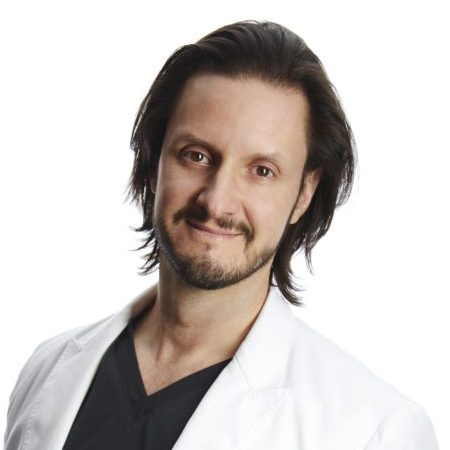
Dusan Sajic, MD, PhD
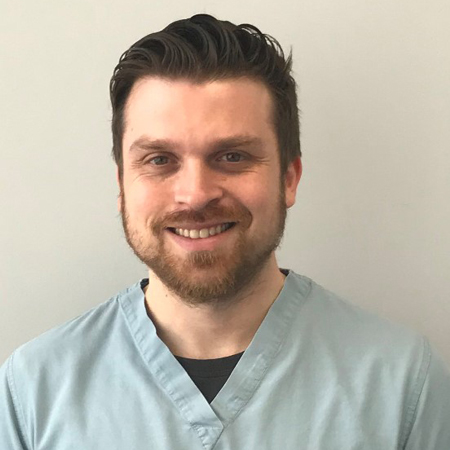
Richard Backstein, MD
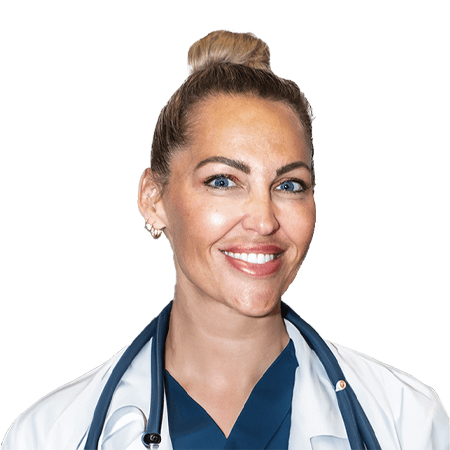
Sonja Sajic, CCPA

Toni Alberto, CCPA
With more than 20 years of experience, deRMA Skin Institute strive to offer patients the most advanced treatments available to keep their skin healthy and looking its best. Board Certified Dermatologist, Dusan Sajic, MD, PhD, board-certified Plastic and Reconstructive Surgeon, Richard Backstein, MD, FRCSC, Sonja Sajic, CCPA, and Toni Alberto CCPA are committed to providing state-of-the-art medical, surgical and cosmetic treatments to all patients in Guelph, Cambridge, Kitchener, Hamilton, Milton, and surrounding areas.
Contact Us
Fields marked * are required
If you are an existing patient inquiring about appointments and services, please contact
Guelph Cosmetic Department: (888) 803-3762 cosmetic@dermaskininstitute.com
Guelph Medical Department: (519) 836-8558 patientcare@dermaskininstitute.com