

COSMETIC:
(888) 803-3762
MEDICAL:
(519) 836-8558

15
Sep
When to See a Dermatologist in Guelph: A Doctor’s Guide
TL;DR: Book a dermatologist for any mole that’s new, changing, or bleeding, a rash that hasn’t settled after a few weeks of sensible care, acne that’s starting to scar, or facial redness that keeps returning. Published Ontario research puts the median non-urgent dermatology wait at 12.7 weeks, so ask your family doctor for a referral early rather than watching and waiting. Medical visits are OHIP-covered once you have that referral; cosmetic concerns don’t need one. Genuinely worrying lesions should be flagged as urgent in the referral letter. When in doubt, get it checked. An early answer beats months of guessing.
Skin disease is the fourth leading cause of non-fatal disease burden worldwide (Hay et al., 2014). That number surprises people. We tend to file skin problems under “annoying” rather than “medical,” and so we wait. In my practice in Guelph, I see the cost of waiting every week: melanomas that sat unexamined for a year, acne scars that never needed to form, eczema that stole months of sleep from busy parents. I’m Dr. Dusan Sajic, a dermatologist practising here in Guelph, and this guide answers one question. When does a skin problem deserve a specialist instead of another tube of drugstore cream? Let’s walk through it honestly, evidence first.
Key Takeaways
- Skin disease ranks fourth among all causes of non-fatal disease burden worldwide (Hay et al., 2014).
- Ontario’s median dermatology wait is 12.7 weeks for non-urgent referrals and 9.0 weeks for urgent ones (Yadav et al., 2016).
- Dermatologists detected melanoma with 76.9% sensitivity on clinical exam versus 37.5% for primary care physicians (Chen et al., 2024).
- Psoriasis affects 1 million Canadians (Canadian Dermatology Association) and rosacea more than 3 million (CDA).
What Does a Dermatologist Actually Treat?
A dermatologist diagnoses and treats diseases of the skin, hair, and nails, and the Canadian caseload is enormous. Psoriasis alone affects 1 million Canadians (Canadian Dermatology Association), while rosacea affects more than 3 million (CDA). Those two conditions barely scratch the surface of what lands on my schedule.
Medical dermatology is the branch of medicine focused on diagnosing and managing skin, hair, and nail disease. Meanwhile, cosmetic dermatology addresses appearance-driven concerns. The two overlap far more than most people expect, and plenty of visits involve a bit of both.
Here’s what commonly brings patients through my door:
- Stubborn acne in teens and adults
- Facial redness, flushing, and visible blood vessels
- Eczema and psoriasis that keep flaring
- Melasma and other pigmentation changes
- Moles and spots that need a trained eye
- Hair loss and nail changes
Does a concern need to be dangerous to justify a visit? No. If a skin problem affects your sleep, your confidence, or your daily comfort, it’s medical enough. You can browse the full scope of medical dermatology care we provide, but the short version is simple: if it’s on your skin and it worries you, it qualifies.
Which Skin Changes Should Never Wait?
Any spot that’s new, growing, bleeding, or changing deserves prompt assessment, because diagnostic accuracy differs sharply by training. In a 2024 meta-analysis of 100 studies, dermatologists detected melanoma with 76.9% sensitivity on clinical examination versus 37.5% for primary care physicians (Chen et al., 2024).
Melanoma is the most dangerous of the common skin cancers, and it’s very treatable when caught early. The same pooled analysis, drawn largely from studies outside Canada, found the gap widened with better tools. Dermoscopy is a handheld magnification technique that lets us examine structures beneath the skin’s surface. With it, dermatologist sensitivity reached 85.7% versus 49.5% in primary care. Experienced dermatologists had 13.3 times higher odds of an accurate melanoma diagnosis using dermoscopy (95% CI 7.2-24.5).
So what does “changing” look like in real life? Growth, darkening, new colours appearing within one spot, ragged borders, itching, crusting, or bleeding without injury. A sore that heals and then reopens belongs on that list too. So does the “ugly duckling”: the one mole that looks different from every other mole you have.
Consequently, if any of that sounds familiar, ask your family doctor to mark the referral urgent, and say the words out loud at your appointment. For patients with many moles or a family history of skin cancer, mole mapping gives us a photographic baseline to compare year over year. In my experience, that baseline settles more anxious 2 a.m. questions than any single exam can.
How Long Are Dermatology Wait Times in Ontario?
Longer than they should be. A simulated-patient study published in PLOS ONE, based on calls made in 2014, found Ontario’s median dermatology wait was 12.7 weeks for non-urgent referrals, 9.0 weeks for urgent referrals, and just 3.0 weeks for cosmetic appointments (Yadav et al., 2016).
The same research exposed a triage problem. Only 24% of practices could offer an urgent medical appointment within two weeks. Meanwhile, 60% could book a cosmetic consultation that fast. Read that again: a changing mole often waited longer than a wrinkle.
Why does this matter for you? Because the clock only starts once your referral is actually sent. However, patients often spend months privately “keeping an eye on” a spot before mentioning it to anyone. Those months are the ones you control. Raise skin concerns at your next family doctor visit, ask for the referral now, and make sure red-flag features are written into the letter. A well-documented referral is often the difference between the urgent queue and the general one.
Do You Need a Referral to See a Dermatologist in Guelph?
For OHIP-covered medical dermatology, yes, you need a referral from a physician or nurse practitioner, and it’s worth requesting early. In an Ontario audit of specialist referrals, dermatology carried the longest median non-urgent wait of any specialty: 112 days (Liddy et al., 2018).
The rules confuse a lot of people, so here’s the plain version. Medical concerns, think suspicious moles, rashes, eczema, psoriasis, and rosacea, are generally covered by OHIP once a referral is in place. Cosmetic concerns don’t require a referral, but they’re not covered either. Some problems genuinely straddle the line. Acne is the classic example, and I’ve unpacked exactly how that works in medical versus cosmetic acne treatment.
However, don’t let the referral step become an excuse to delay. One family doctor visit and a short note gets the process moving. For a fuller walkthrough of how it works at our clinic, see do I need a referral.
What happens at your first appointment?
Expect questions before anything else. What have you tried? How long has it been there? What’s your family history? For instance, a mole check may include dermoscopy and photographs, while a rash visit may end with a biopsy, a prescription plan, or both. Bring your product list and your medication list. Ten minutes of preparation makes the visit twice as useful.
When Should You See a Dermatologist for Acne?
See a specialist when acne scars, forms deep painful nodules, or shrugs off several months of consistent drugstore care. Acne affects 9.4% of the global population, making it the eighth most prevalent disease in the world (Tan & Bhate, 2015), global figures compiled in a review led by a Canadian dermatologist.
Scarring is the line I draw hardest. Once acne scars form, softening them takes far more effort than preventing them would have. Lingering red or brown marks after breakouts heal are the early warning sign. Deep, tender nodules along the jaw or back are another. Would you wait a year on a sprained knee that wasn’t healing? Skin deserves the same logic.
Prescription options, including topical retinoids, hormonal therapies, and isotretinoin, are prescription treatments requiring medical assessment. That’s not red tape. Matching the treatment to your skin, your history, and your bloodwork where needed is exactly why these medications work as well as they do. In my experience, the patients who avoid permanent marks are almost always the ones who came in early. If your active acne has resisted three months of consistent over-the-counter care, that’s your signal to escalate.
What About Eczema, Psoriasis, and Ongoing Redness?
Chronic inflammatory skin disease is more common in Canadian adults than most people assume. In an 18-country survey, 10% of Canadian adults reported atopic dermatitis within the previous 12 months (Clinical and Experimental Dermatology, 2025). That’s one in ten adults, itching.
Atopic dermatitis, better known as eczema, is a chronic, itchy, inflammatory skin condition, and adult cases are routinely dismissed as “sensitive skin.” Psoriasis carries its own weight, affecting 1 million Canadians according to the Canadian Dermatology Association. Rosacea deserves special mention because it does not resolve on its own, and untreated rosacea can worsen over time. If persistent facial redness sounds like you, start with our rosacea overview.
So when do chronic conditions justify a specialist rather than another refill of the same cream? My rule of thumb: when the condition keeps returning, keeps spreading, or keeps you up at night. Consequently, a dermatology visit does three things a rushed refill can’t. It confirms the diagnosis, since many “eczemas” turn out to be something else entirely. It widens the treatment plan beyond one cream. And it screens for the joint and systemic associations some of these diseases carry.
FAQ: Seeing a Dermatologist in Guelph
These are the questions patients ask me most often, and they’re worth answering directly. With Ontario’s median non-urgent dermatology wait sitting at 12.7 weeks (Yadav et al., 2016), informed patients simply get seen sooner.
Do I need a referral to see a dermatologist in Guelph?
For OHIP-covered medical care, yes, from a physician or nurse practitioner. Request it early: dermatology carried the longest median non-urgent referral wait of any specialty in an Ontario audit, at 112 days (Liddy et al., 2018). Cosmetic consultations don’t require a referral. When unsure, ask your family doctor anyway.
How long will I wait to see a dermatologist in Ontario?
Published research found a median of 12.7 weeks for non-urgent referrals and 9.0 weeks for urgent ones (Yadav et al., 2016). Your experience varies by clinic and urgency. However, a referral letter that clearly documents red-flag features can genuinely change which queue you land in.
Can my family doctor check a suspicious mole instead?
They’re a good first stop, and I work closely with local family physicians. Still, pooled international data shows dermatologists detect melanoma with 76.9% sensitivity versus 37.5% in primary care (Chen et al., 2024). For a spot that’s changing, specialist assessment with dermoscopy is the safer route.
Is adult acne worth taking seriously?
Yes. Acne affects 9.4% of the global population and ranks as the eighth most prevalent disease worldwide (Tan & Bhate, 2015), and plenty of that burden sits in adults. Breakouts that persist, scar, or resist drugstore care warrant medical assessment. That’s health care, not vanity.
Does eczema really affect adults in Canada?
It does. In an 18-country survey, 10% of Canadian adults reported atopic dermatitis within the previous 12 months (Clinical and Experimental Dermatology, 2025). Adult eczema is frequently under-treated, and newer therapies have raised the bar for what “well-controlled” means. Persistent itch deserves a proper diagnosis.
Ready to Get Answers About Your Skin?
Here’s the practical takeaway. With non-urgent dermatology referrals waiting a median of 112 days in one Ontario audit (Liddy et al., 2018), the sensible move is starting the process today, not “sometime this fall.”
If something on your skin has changed, or simply worries you, take it seriously. Talk to your family doctor about a referral, and request a consultation with our Guelph clinic. Bring your questions, your product list, and the spot you’ve been meaning to mention. We’ll take it from there.
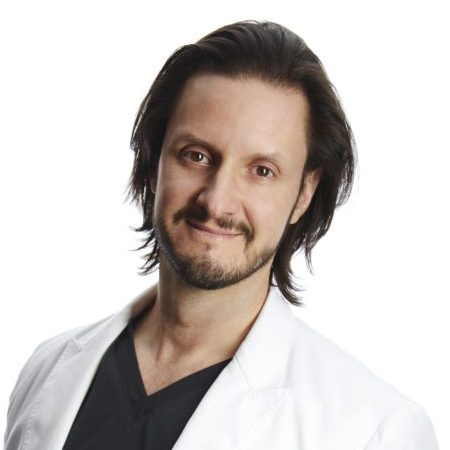
Medically reviewed by Dr. Dusan Sajic, MD, PhD – dermatologist, deRMA Skin Institute, Guelph, ON.
Sources
1. Hay RJ, et al. The global burden of skin disease in 2010: an analysis of the prevalence and impact of skin conditions. Journal of Investigative Dermatology, 2014. https://pubmed.ncbi.nlm.nih.gov/24166134/ 2. Yadav G, et al. Ontario dermatology wait times by appointment type, simulated-patient survey. PLOS ONE, 2016. https://journals.plos.org/plosone/article?id=10.1371%2Fjournal.pone.0162767 3. Liddy C, et al. Specialist referral wait times in Ontario. Healthcare Policy, 2018. https://www.longwoods.com/content/25397/ 4. Chen et al. Meta-analysis of melanoma diagnostic accuracy by clinician type and dermoscopy use (100 studies). JAMA Dermatology, 2024. https://pmc.ncbi.nlm.nih.gov/articles/PMC11561728/ 5. Canadian Dermatology Association. Psoriasis. https://dermatology.ca/public-patients/diseases-conditions/skin-conditions/psoriasis/ 6. Canadian Dermatology Association. Rosacea. https://dermatology.ca/public-patients/diseases-conditions/skin-conditions/rosacea/ 7. Tan JKL, Bhate K. A global perspective on the epidemiology of acne. British Journal of Dermatology, 2015. https://pubmed.ncbi.nlm.nih.gov/25597339/ 8. Twelve-month prevalence of adult atopic dermatitis across 18 countries. Clinical and Experimental Dermatology, 2025. https://academic.oup.com/ced/article/50/10/2054/8154486
Dusan Sajic, MD, PhD
Richard Backstein, MD
Sonja Sajic, CCPA

Toni Alberto, CCPA
With more than 20 years of experience, deRMA Skin Institute strive to offer patients the most advanced treatments available to keep their skin healthy and looking its best. Board Certified Dermatologist, Dusan Sajic, MD, PhD, board-certified Plastic and Reconstructive Surgeon, Richard Backstein, MD, FRCSC, Sonja Sajic, CCPA, and Toni Alberto CCPA are committed to providing state-of-the-art medical, surgical and cosmetic treatments to all patients in Guelph, Cambridge, Kitchener, Hamilton, Milton, and surrounding areas.
Contact Us
Fields marked * are required
If you are an existing patient inquiring about appointments and services, please contact
Guelph Cosmetic Department: (888) 803-3762 cosmetic@dermaskininstitute.com
Guelph Medical Department: (519) 836-8558 patientcare@dermaskininstitute.com