

COSMETIC:
(888) 803-3762
MEDICAL:
(519) 836-8558

11
Aug
Medical vs. Cosmetic Acne Treatment in Guelph
TL;DR: Mild, uncomplicated acne often does just as well with a good cosmetic or over-the-counter regimen as it does with a prescription topical. The research backs that up. But acne with cysts or nodules, a hormonal pattern, existing scarring, or no improvement after 2-3 months needs a proper diagnosis. Delay is the single biggest modifiable risk factor for permanent scarring, even in mild cases. Choose cosmetic care if your acne is mild and improving. See a dermatologist if it isn’t, or if you’re not sure which category you’re in.
Acne affects an estimated 5.6 million Canadians, roughly 20% of the population. It touches 90% of adolescents and 20-30% of adults aged 20-40 at some point (Canadian Dermatology Association). Yet most people try to manage it alone for a long time before booking a dermatology appointment. A 2026 survey of 1,003 people with mild-to-moderate acne found only 3 in 10 had ever seen a dermatologist. 60% said they’d simply resigned themselves to “dealing with it” (Dermatology Times, 2026).
So which camp should you be in? The honest answer is: it depends — not a marketing line, but what the evidence actually shows. This guide walks through what separates medical from cosmetic acne treatment, when each is the right call, and what happens if you guess wrong. It reflects the diagnostic approach used by Dr. Dusan Sajic, a board-certified dermatologist (MD, PhD, FRCPC) practicing in Guelph — not a case for one path over the other.
Key Takeaways
Acne affects roughly 20% of Canadians: 90% of adolescents and 20-30% of adults aged 20-40 (Canadian Dermatology Association).
For mild-to-moderate facial acne, a well-formulated cosmetic regimen can match a prescription topical’s 12-week efficacy (Journal of Cosmetic Dermatology, 2024).
43% of patients evaluated by dermatologists have scarring, and 69% of those had only mild-to-moderate acne at the time (Journal of Drugs in Dermatology, 2017).
Only 30% of people with mild-to-moderate acne have ever consulted a dermatologist (Dermatology Times, 2026).
What’s the Real Difference Between Medical and Cosmetic Acne Treatment?
Medical acne treatment starts with a diagnosis. From there, a physician prescribes a regimen matched to the actual cause: topical or oral retinoids, antibiotics, hormonal therapy, or isotretinoin, all monitored by a doctor (American Academy of Dermatology / JAAD guideline, 2024). Cosmetic treatment skips that step. It covers over-the-counter and spa-level care: cleansers, salicylic acid, benzoyl peroxide, facials, extractions.
However, the distinction isn’t “better vs. worse.” It’s whether anyone has actually figured out what kind of acne you have before deciding how to treat it. Here’s the question a dermatologist is trained to ask, and it’s rarely the question a skincare aisle answers: not “what’s the strongest product,” but “why is this happening.” For instance, hormonal, bacterial, and inflammatory acne all respond to genuinely different treatments. No over-the-counter regimen is built to tell them apart.
Isotretinoin is the clearest example of a purely medical treatment: a prescription-only oral medication that requires blood-work monitoring and can’t be self-administered under any cosmetic pathway. See deRMA’s active acne treatment page for how the medical pathway is structured in practice.
When Is a Cosmetic or Over-the-Counter Routine Enough?
For mild-to-moderate facial acne specifically, a 2024 clinical trial found a cosmetic salicylic-acid regimen matched a prescription combination’s 12-week efficacy. It also caused less dryness and irritation at week 4 (Journal of Cosmetic Dermatology, 2024). That’s a real, evidence-backed case for starting with a well-formulated cosmetic routine, provided the acne is genuinely mild.
That said, the caveat matters as much as the finding. This result applies to mild-to-moderate, uncomplicated acne only. It doesn’t extend to cystic or nodular breakouts, hormonal patterns, or acne that’s already left marks. Those categories weren’t tested with cosmetic-only care in the study, simply because the clinical stakes are different.
A reasonable self-check before choosing the cosmetic route:
- Breakouts are surface-level (blackheads, whiteheads, small pustules), not deep, painful cysts or nodules
- You haven’t noticed dark spots or pitted marks left behind after blemishes heal
- There’s no clear pattern tied to your menstrual cycle or jawline concentration
- You’re willing to give a routine a full 2-3 months before judging it (Mayo Clinic)
When Does Acne Need a Board-Certified Dermatologist?
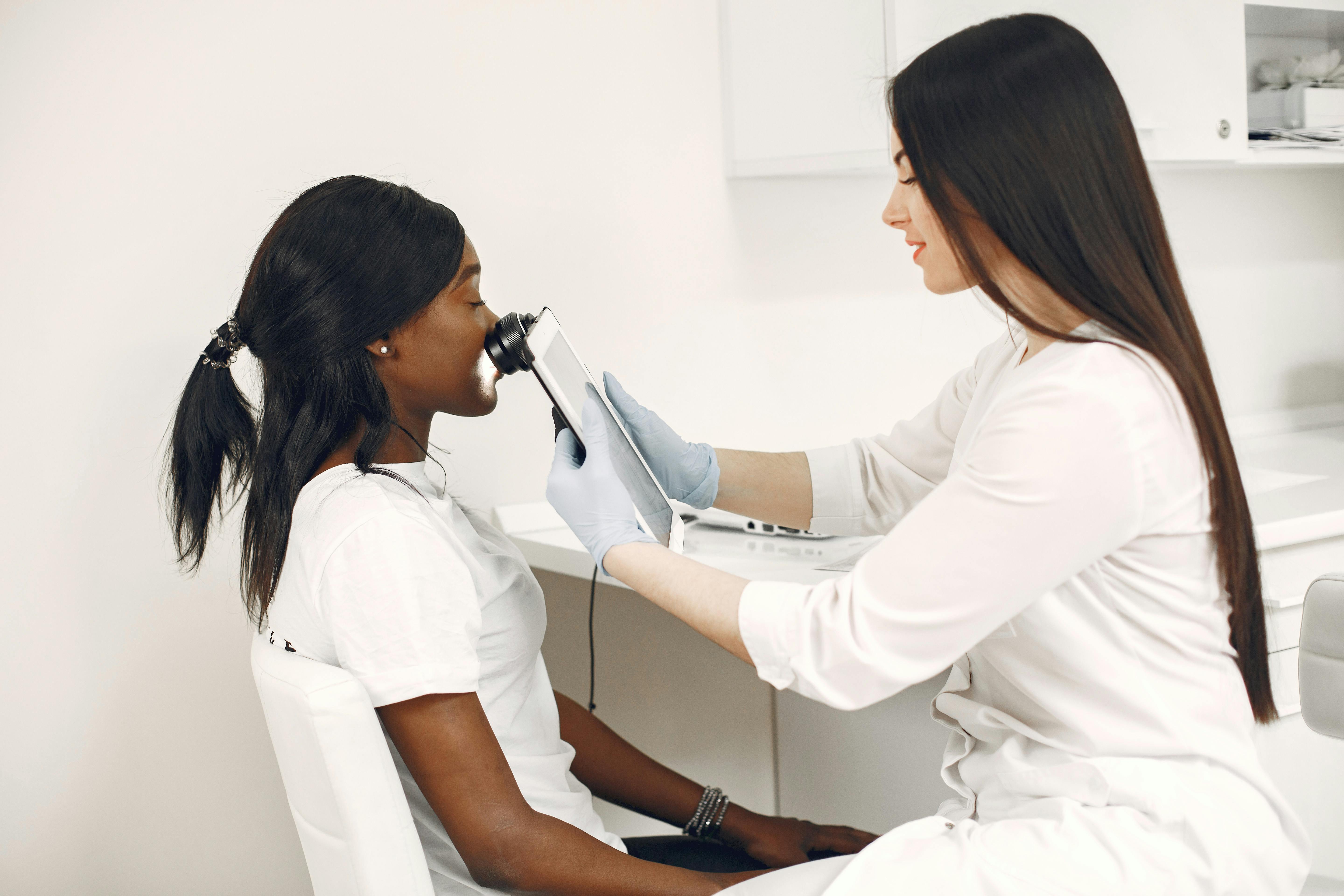
The American Academy of Dermatology’s 2024 clinical guideline gives isotretinoin a strong recommendation for a specific group: acne that’s severe, causing real psychological distress, already scarring, or that hasn’t responded to standard topical and oral therapy (AAD/JAAD Guidelines of Care for Acne Vulgaris, 2024). That’s a meaningfully higher bar than “acne that’s annoying.” It’s acne that’s actively causing harm.
So, why go through the extra step? The efficacy numbers explain it. In clinical studies, low-dose isotretinoin produced marked improvement, 75%+ clearance, in 90% of patients. Relapse at six months was just 4% (Indian Journal of Dermatology). Similarly, for hormonal acne in women, oral spironolactone showed significantly greater improvement than placebo across a meta-analysis of 563 patients (OR 6.59, Journal of Cosmetic Dermatology, 2025). Neither treatment, though, is available without a prescriber’s diagnosis first.
Wondering whether you can just walk into a dermatology office, or whether you need a referral first? deRMA’s referral guide answers that practical next question.
See a dermatologist if:
- Breakouts include cysts or nodules (deep, painful bumps under the skin)
- Nothing you’ve tried without a prescription has worked after 2-3 months (Mayo Clinic)
- Acne follows a hormonal pattern: jawline or chin concentration, cycle-linked flares
- You’re already seeing dark marks or pitted scarring
- Acne is affecting your confidence or daily life. As the AAD puts it, “virtually every case of acne can be cleared” with the right diagnosis and treatment (AAD)
Why Waiting Can Cost You More Than Time
Treatment delay is a modifiable risk factor for permanent scarring, and scarring isn’t reserved for severe cases. In a study of 1,972 patients evaluated by 120 dermatologists, 43% had acne scarring. Notably, 69% of those scarred patients had only mild-to-moderate acne at the time it happened (Journal of Drugs in Dermatology, 2017). In other words, mild doesn’t mean low-stakes. It just means the outcome is harder to predict without an exam.
In my experience as a dermatologist, the hardest acne cases to treat usually aren’t the ones that came in early. They’re the ones where a workable-seeming regimen ran for a year or two first. By the time anyone actually examines what’s happening underneath the skin, scarring has often already set in. At that point, treatment shifts from managing breakouts to correcting damage that’s already there. That’s a longer, more involved process than treating active acne would have been.
That delay is common, and it isn’t free. In a 2021 patient survey, people who self-treated before consulting a dermatologist spent an average of $850 (median $417) over six months on over-the-counter products. 61% of those who eventually saw a dermatologist had waited a year or more first (All About Acne survey, 2021; a smaller patient-advocacy sample, so treat this as directional rather than definitive).
If scarring has already happened, that’s a separate, and very treatable, conversation. deRMA’s acne scarring page and this guide to PRP microneedling for acne scars cover what’s available once marks have formed.
What to Expect at a Medical Dermatology Consultation for Acne

First, a first visit is a diagnostic conversation, not a sales pitch. Expect a skin exam, a history of what you’ve already tried, and a discussion of whether the pattern points toward hormonal, bacterial, or inflammatory acne. From there, treatment gets matched to what’s actually happening, instead of applied as a one-size regimen.
Adult acne deserves its own mention here, too. Three-quarters of adult acne cases occur in women, often tied to hormonal shifts rather than the drivers behind teenage acne (Canadian Dermatology Association). Consequently, a regimen built for a 16-year-old’s skin isn’t automatically the right fit for a 32-year-old’s. That’s part of why a diagnosis-first approach beats guesswork for anyone outside the “obviously mild, clearly improving” category.
Ready to get an actual diagnosis instead of trying one more product? Request a consultation with deRMA Skin Institute.
Frequently Asked Questions
Can I treat mild acne myself before seeing a dermatologist?
Yes, for genuinely mild, surface-level acne. A 2024 study found a cosmetic salicylic-acid regimen matched a prescription topical’s effectiveness over 12 weeks for mild-to-moderate cases (Journal of Cosmetic Dermatology). If you’re not seeing improvement within 2-3 months, that’s your cue to get a diagnosis.
How long should I try a treatment before deciding it isn’t working?
Give any regimen, cosmetic or prescription, 2 to 4 months before judging it. Acne treatments work on the skin’s renewal cycle, not overnight (Mayo Clinic). No improvement in that window, or things getting worse? See a dermatologist rather than switching products again.
Is adult acne different from teenage acne?
Often, yes. Three-quarters of adult acne cases occur in women, frequently linked to hormonal patterns rather than the oil-and-bacteria drivers typical of teenage acne (Canadian Dermatology Association). That’s part of why adult acne can resist over-the-counter routines that worked fine in your teens.
Does mild acne really need a dermatologist if it’s not severe?
Not automatically, but don’t assume mild means safe from scarring. 69% of scarred patients in one study had only mild-to-moderate acne when the scarring occurred (Journal of Drugs in Dermatology, 2017). If mild acne is improving with cosmetic care, keep going. If it’s persistent or unpredictable, a diagnosis removes the guesswork.
What if my acne has already left scars?
That’s a separate, well-established treatment category. deRMA’s acne scarring and scar revision page covers laser resurfacing, PRP microneedling, and other options built specifically for marks left behind after breakouts heal.
The Bottom Line
Most acne doesn’t need to become a medical case. But the way to know which category you’re in is a diagnosis, not a guess. Mild, improving acne can genuinely do well with cosmetic care. Acne that’s cystic, hormonal, scarring, or simply not responding after a few months is worth a dermatologist’s assessment, before more time and money goes into products that were never going to fix the underlying cause.
Book a consultation with Dr. Dusan Sajic to get a proper diagnosis instead of another guess.
Medically reviewed by Dr. Dusan Sajic, MD, PhD, FRCPC, DABD — board-certified dermatologist, deRMA Skin Institute, Guelph, ON.
Sources
- Canadian Dermatology Association, “Acne,” retrieved 2026-07-09, https://dermatology.ca/public-patients/diseases-conditions/skin-conditions/acne/
- Reynolds RV, et al., “Guidelines of Care for the Management of Acne Vulgaris,” JAAD/American Academy of Dermatology, Jan 2024, https://pubmed.ncbi.nlm.nih.gov/38300170/
- “Safety and Efficacy of Low-Dose Isotretinoin in the Treatment of Moderate to Severe Acne Vulgaris,” Indian Journal of Dermatology (PMC), 2014, https://pmc.ncbi.nlm.nih.gov/articles/PMC4037971/
- “The Effect of Topical Retinoids in Treatment of Acne Vulgaris in Khartoum Teaching Dermatological Hospital,” International Journal of Research in Dermatology, Nov-Dec 2024, https://www.ijord.com/index.php/ijord/article/view/1930
- “Efficacy and Safety of Oral Spironolactone for Women With Acne Vulgaris: A Systematic Review and Meta-Analysis,” Journal of Cosmetic Dermatology (PMC), 2025, https://pmc.ncbi.nlm.nih.gov/articles/PMC12359290/
- Tan J, Kang S, Leyden J, “Prevalence and Risk Factors of Acne Scarring Among Patients Consulting Dermatologists in the USA,” Journal of Drugs in Dermatology, 2017, https://pubmed.ncbi.nlm.nih.gov/28300850/
- “Efficacy and Tolerability of a Novel Cosmetic and Over-the-Counter Facial Acne Regimen Versus a Prescription Treatment,” Journal of Cosmetic Dermatology (PMC), Sept 2024, https://pmc.ncbi.nlm.nih.gov/articles/PMC11740270/
- “Survey Reveals the Financial Cost of Self-Treating Acne,” All About Acne (acne.org.au), 2021, https://acne.org.au/2021/09/cost-self-treating-acne/ — small patient-advocacy sample (n=46), directional not definitive
- “Acne Survey Reveals Only 3 in 10 Patients Have Gone to a Dermatologist for Treatment,” Dermatology Times (Sun Pharma-sponsored survey), June 2026, https://www.dermatologytimes.com/view/acne-survey-reveals-only-3-in-10-patients-have-gone-to-a-dermatologist-for-treatment — industry-sponsored; disclosed
- Mayo Clinic, “Acne — Diagnosis and Treatment,” retrieved 2026-07-09, https://www.mayoclinic.org/diseases-conditions/acne/diagnosis-treatment/drc-20368048
- American Academy of Dermatology, “When Acne Won’t Clear,” retrieved 2026-07-09, https://www.aad.org/when-acne-wont-clear
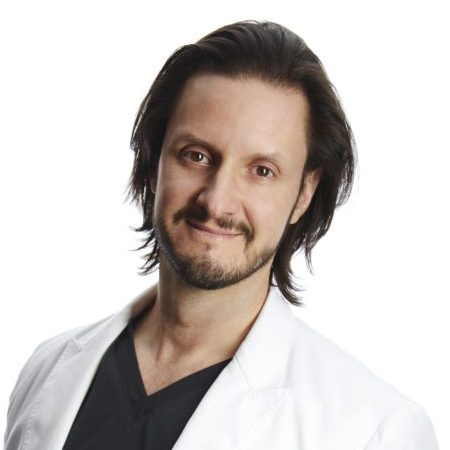
Dusan Sajic, MD, PhD
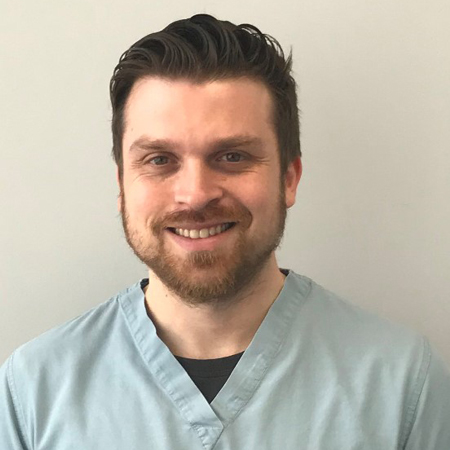
Richard Backstein, MD

Sonja Sajic, CCPA

Toni Alberto, CCPA
With more than 20 years of experience, deRMA Skin Institute strive to offer patients the most advanced treatments available to keep their skin healthy and looking its best. Board Certified Dermatologist, Dusan Sajic, MD, PhD, board-certified Plastic and Reconstructive Surgeon, Richard Backstein, MD, FRCSC, Sonja Sajic, CCPA, and Toni Alberto CCPA are committed to providing state-of-the-art medical, surgical and cosmetic treatments to all patients in Guelph, Cambridge, Kitchener, Hamilton, Milton, and surrounding areas.
Contact Us
Fields marked * are required
If you are an existing patient inquiring about appointments and services, please contact
Guelph Cosmetic Department: (888) 803-3762 cosmetic@dermaskininstitute.com
Guelph Medical Department: (519) 836-8558 patientcare@dermaskininstitute.com