

COSMETIC:
(888) 803-3762
MEDICAL:
(519) 836-8558

12
Aug
Injectables in Guelph: A Dermatologist’s Complete Guide
TL;DR: Everything called an “injectable” belongs to one of three families. Neuromodulators relax expression muscles for roughly 3-4 months. Hyaluronic acid fillers restore volume immediately, with visible results lasting months to a couple of years. Biostimulators build your own collagen gradually over a longer arc. All three are medical treatments; in Canada, botulinum toxin is a prescription drug. Serious complications are uncommon, 0.0041% of injection sites in one large review, but they cluster around high-risk facial zones and unqualified injectors. My advice in one line: choose your injector before you choose your injectable.
Neuromodulator injections were performed 9,883,711 times in the United States in 2024, up 4% in a single year and the most common minimally invasive cosmetic procedure tracked (American Society of Plastic Surgeons, 2024, US data). Meanwhile, hyaluronic acid fillers added another 5.3 million. In my practice at deRMA Skin Institute in Guelph, the questions have grown just as fast, and they’re usually versions of the same three: what’s the difference between all these products, how long do they last, and are they safe?
Fair questions. This guide answers them the way I would across the consultation table: with published evidence, funding disclosures where they matter, and the safety conversation most clinic pages skip.
Key Takeaways
- US clinicians performed 9,883,711 neuromodulator, 5,331,426 hyaluronic acid filler, and 932,861 biostimulator procedures in 2024, and all three categories grew (American Society of Plastic Surgeons, 2024, US data).
- Duration differs by family: a median of 120 days for neuromodulators in pooled trials (Dermatologic Surgery, 2012, manufacturer-affiliated), and roughly 6-12 months for lips to 2 years for cheeks on filler labels (FDA pivotal-trial data, manufacturer-funded).
- Vascular occlusion occurred about once per 6,410 filler syringes with needles versus once per 40,882 with cannulas, and 85% of cases resolved without long-term harm (JAMA Dermatology, 2021).
- Health Canada regulates botulinum toxin as a prescription drug, and 34.5% of hospitalized filler complications in one series involved non-credentialed injectors (Health Canada; Journal of Cosmetic Dermatology, 2024).
What Are the Three Families of Injectables?
Every injectable treatment you’ve heard of fits one of three families: neuromodulators, hyaluronic acid fillers, or biostimulators. In fact, together they accounted for more than 16 million US procedures in 2024, with neuromodulators alone at 9,883,711 treatments (American Society of Plastic Surgeons, 2024, US data). In my experience, knowing which family does what clears up half the confusion patients arrive with.
- Neuromodulators (Botox, Dysport, Xeomin) are prescription drugs derived from botulinum toxin. They temporarily relax the specific muscles whose repeated contraction creases the skin: frown lines, forehead lines, crow’s feet.
- Hyaluronic acid (HA) fillers (dermal fillers) are smooth injectable gels made from hyaluronic acid, a water-binding molecule your skin already produces. They restore lost volume, structure, and definition the day they’re placed.
- Biostimulators (Sculptra and Radiesse) are injectables that trigger your own fibroblasts to build new collagen. They trade instant results for gradual, longer-lasting improvement.
However, one thing all three share: none of them is a beauty product. Each is a regulated medical treatment in Canada, and that fact does real work later in this guide.
How Do Neuromodulators Work, and How Long Do They Last?
Neuromodulators block the release of acetylcholine at the neuromuscular junction, which temporarily relaxes the treated muscle and softens the crease it keeps folding (Medicine, 2023). Meanwhile, duration is well measured: a median of 120 days at maximum contraction, pooled from four Phase III trials totalling 621 patients (Dermatologic Surgery, 2012, manufacturer-affiliated authors).
In plain terms, I tell patients 3-4 months for most people, with honest variation on either side. The muscle isn’t damaged; the signal is paused. Consequently, as the nerve endings recover, movement returns, and so does the line. Nothing about that is permanent, in either direction.
How fast does it start? In one onset study, about 48% of patients noticed an effect by day 1 and roughly 90% by day 3 (2011 study, Allergan-funded). The framing I use in clinic: visible within 1-3 days, full effect at about two weeks. Book accordingly before events.
One more thing, because it decides where you should be treated: in Canada, botulinum toxin is a prescription drug, not a spa add-on. If you’re considering a first treatment, my first-timer’s guide to Botox in Guelph walks through assessment, dosing logic, and aftercare step by step.
How Do Hyaluronic Acid Fillers Work, and How Long Do They Last?
HA fillers restore volume the moment they’re injected, and visible duration depends mostly on location. In the US pivotal trial reviewed by the FDA, that meant roughly 6-12 months in lips versus up to 2 years for firm cheek products (FDA pivotal-trial data, manufacturer-funded). Lips simply move more, so they grind product down faster.
The gel itself is crosslinked hyaluronic acid, which binds water and holds structure wherever it’s placed. Product stiffness gets matched to the job: robust gels for deep cheek support, softer ones like Belotero for fine lines and delicate areas, and Restylane formulations across lips and midface. At the lightest end, skin boosters use ultra-thin HA for hydration and skin quality rather than shape. For fundamentals and our natural-results dosing philosophy, start with the dermal filler 101 guide.
Now the honest part. An MRI review of 33 mid-face patients found HA filler detectable in every single patient at two or more years after injection. Twelve patients were more than five years out; one was at fifteen (PRS Global Open, 2024). Here’s the catch: the visible result fades before the gel is gone, so the old assumption that filler fully metabolizes within 6-12 months doesn’t survive the imaging data. In my practice, that means top-ups follow an assessment of what’s still there, not a calendar reminder. I unpack the maintenance implications in how long fillers really last.
Worried filler automatically means looking overdone? In fact, that reputation comes from stacking and overdosing, not from the product class itself. My lip filler myths piece covers what well-dosed results actually look and feel like.
What Are Biostimulators Like Sculptra and Radiesse?
Biostimulators convince your skin to rebuild its own collagen rather than simply adding volume. The effect is slow but durable: in a randomized trial against collagen filler, improvement persisted up to 25 months after the final poly-L-lactic acid treatment (Journal of the American Academy of Dermatology, 2010, manufacturer-funded). Meanwhile, US demand reached 932,861 procedures in 2024 (American Society of Plastic Surgeons, US data).
- Sculptra (poly-L-lactic acid, PLLA) works by stimulating fibroblast collagen production. Consequently, results build gradually across multiple sessions and several months, which is exactly why they tend to read as natural rather than “done.”
- Radiesse (calcium hydroxylapatite, CaHA) offers some immediate structure, and histology studies show genuine new collagen forming around its microspheres, with clinical effect typically lasting 12-18 months (2018 histology study). In dilute form, we use it for skin quality in areas like the neck rather than for shape.
Two caveats keep this category honest. First, there’s no instant reveal; you’re growing collagen, not placing it. Second, unlike HA fillers, biostimulators have no dissolving enzyme, so injector judgment carries even more weight. Curious why the industry is pivoting so loudly in this direction? I wrote about the 2026 shift toward biostimulatory injectables and where the hype outruns the data.
How Safe Are Injectables, Really?
Safer than the horror stories, and less trivial than “lunchtime treatment” marketing implies. In fact, across 290,307 injection sites in a 2025 retrospective review, severe complications occurred at a rate of 0.0041% (2025 study). Genuinely uncommon. However, uncommon isn’t never, and three specifics deserve plain language.
Vascular occlusion is the filler complication I plan around most: product entering or compressing a blood vessel and cutting skin off from its blood supply. An independent survey of 370 board-certified dermatologists covered roughly 1.66 million syringes (JAMA Dermatology, 2021, university-funded). It found occlusion about once per 6,410 syringes with needles versus once per 40,882 with blunt cannulas, roughly a six-fold difference (p < .001). Two takeaways from that data. Cannulas reduce risk; they don't eliminate it, so site, product, and anatomy knowledge still matter. And 85% of occlusions had no long-term sequelae, which is exactly what early recognition and the stocked complication protocol in our Guelph clinic are for.
Vision loss is the rarest and most serious risk, caused by filler reaching vessels that connect to the eye’s circulation. A review spanning 1906 to 2023 found 511 published cases worldwide, concentrated at the nose (40.6%), forehead (27.7%), and glabella (19.0%) (Aesthetic Surgery Journal, 2024). The hard truth in that paper: no treatment was statistically associated with visual improvement once it happened. Consequently, I treat this purely as a prevention problem: detailed vascular anatomy, conservative technique and product selection in high-risk zones, and declining injections where the risk outweighs the benefit.
In my experience, neuromodulator risks run milder: typically temporary and technique-related, like a heavy brow or short-lived asymmetry. Who’s holding the syringe changes every number in this section, which brings us to regulation.
Who Should Perform Injectables in Ontario?
Someone qualified to assess you medically, inject safely, and manage complications, using Health Canada-authorized products. The pattern in the complication data is hard to ignore: in one series of 58 hospitalizations for filler complications, 34.5% of patients had been injected by non-credentialed individuals (Journal of Cosmetic Dermatology, 2024). More importantly, complications requiring surgery were significantly more frequent with nonclinician injectors in that series (p = 0.01).
To be fair to the evidence: that’s a case series without denominators, from outside Canada, so it can’t tell you anyone’s overall risk. That said, it does tell you where severe outcomes cluster.
Here’s the Canadian regulatory floor:
- Injectable products must be authorized by Health Canada before they can legally be sold here.
- Botulinum toxin products are prescription drugs. That means a medical assessment, a prescription, and treatment under qualified specialist supervision, not a walk-in impulse buy.
- Unauthorized product is a documented problem, not a hypothetical: Health Canada has seized unauthorized botulinum toxin being sold in Canada and warned it may pose serious health risks (Health Canada advisory).
Whoever you see, in Guelph or anywhere else, ask four questions:
- Who performs my assessment, and who prescribes?
- Is this product Health Canada-authorized, and may I see the packaging?
- What’s your complication plan, and is hyaluronidase stocked on site for HA work?
- Which treatments would you refuse me, and why? A confident “here’s what I won’t do” is one of the more reassuring answers you can hear.
How Do You Choose the Right Injectable?
Start from the problem, not the product name. Every family grew again in 2024, with neuromodulators up 4% and both filler categories up 1% in US data (American Society of Plastic Surgeons, 2024). Mostly, that means more marketing aimed at you, not more clarity. My decision logic is simpler:
- The line shows mainly when you move (frowning, squinting, raising your brows)? That’s neuromodulator territory.
- You’ve lost volume, definition, or structure that’s visible at rest? That’s usually an HA filler conversation: immediate, adjustable, and enzyme-reversible.
- The change is broader thinning, sagging, or skin-quality loss across a region? Biostimulators fit that gradual, longer arc.
- The concern is texture and hydration more than shape? Skin boosters or energy-based treatments may serve you better than any volumizer.
In practice, thoughtful plans often sequence families rather than picking a single winner. Our Gold Protocol overview shows how neuromodulators, biostimulators, and HA filler can layer across separate visits, each doing a job the others can’t.
I see it weekly in consultation: sometimes the right plan is no needle at all this year. A consultation should be allowed to end that way.
Frequently Asked Questions
How long do injectables last?
It depends on the family. Neuromodulators: a median of 120 days at maximum contraction in pooled Phase III trials (Dermatologic Surgery, 2012, manufacturer-affiliated). HA fillers: roughly 6-12 months in lips and up to 2 years in cheeks (FDA pivotal-trial data). Biostimulators: up to 25 months after the final session in one randomized trial (JAAD, 2010, manufacturer-funded).
Is Botox a prescription drug in Canada?
Yes. Health Canada regulates botulinum toxin as a prescription drug, even though neuromodulators were 2024’s most common minimally invasive procedure at 9,883,711 US treatments (ASPS, US data). Health Canada has also seized unauthorized versions (advisory). Expect an assessment, a prescription, and qualified supervision; my first-treatment guide covers the process.
How dangerous are dermal fillers?
Serious complications are uncommon but real: severe events occurred at 0.0041% of 290,307 injection sites in a 2025 review (source), and 85% of vascular occlusions in a 1.66-million-syringe study resolved without long-term harm (JAMA Dermatology, 2021). Risk concentrates in high-risk facial zones and less-qualified hands. Consequently, injector choice is your main safety decision.
What’s the difference between Botox and fillers?
They solve different problems. Neuromodulators pause the muscle signal that creases skin during expression (Medicine, 2023); HA fillers replace volume and structure that’s missing at rest. US demand ran 9.9 million versus 5.3 million procedures in 2024 (ASPS, US data). Many plans eventually use both, in different areas and sessions.
Do fillers dissolve on their own?
Slower than the labels imply. MRI research found HA filler still present at two or more years in all 33 scanned mid-face patients, and past five years in twelve (PRS Global Open, 2024). The visible result fades first; the product lingers. That’s why I reassess before any top-up; the full breakdown is in how long fillers really last.
Considering Injectables in Guelph?
What I tell patients is simple: start with an assessment, not a product menu. Bring your questions and your skepticism; I’ll bring the published evidence, including when the honest recommendation is less than you expected, or nothing yet. Request a consultation at our Guelph clinic; we also see patients from Kitchener-Waterloo, Cambridge, and Fergus.
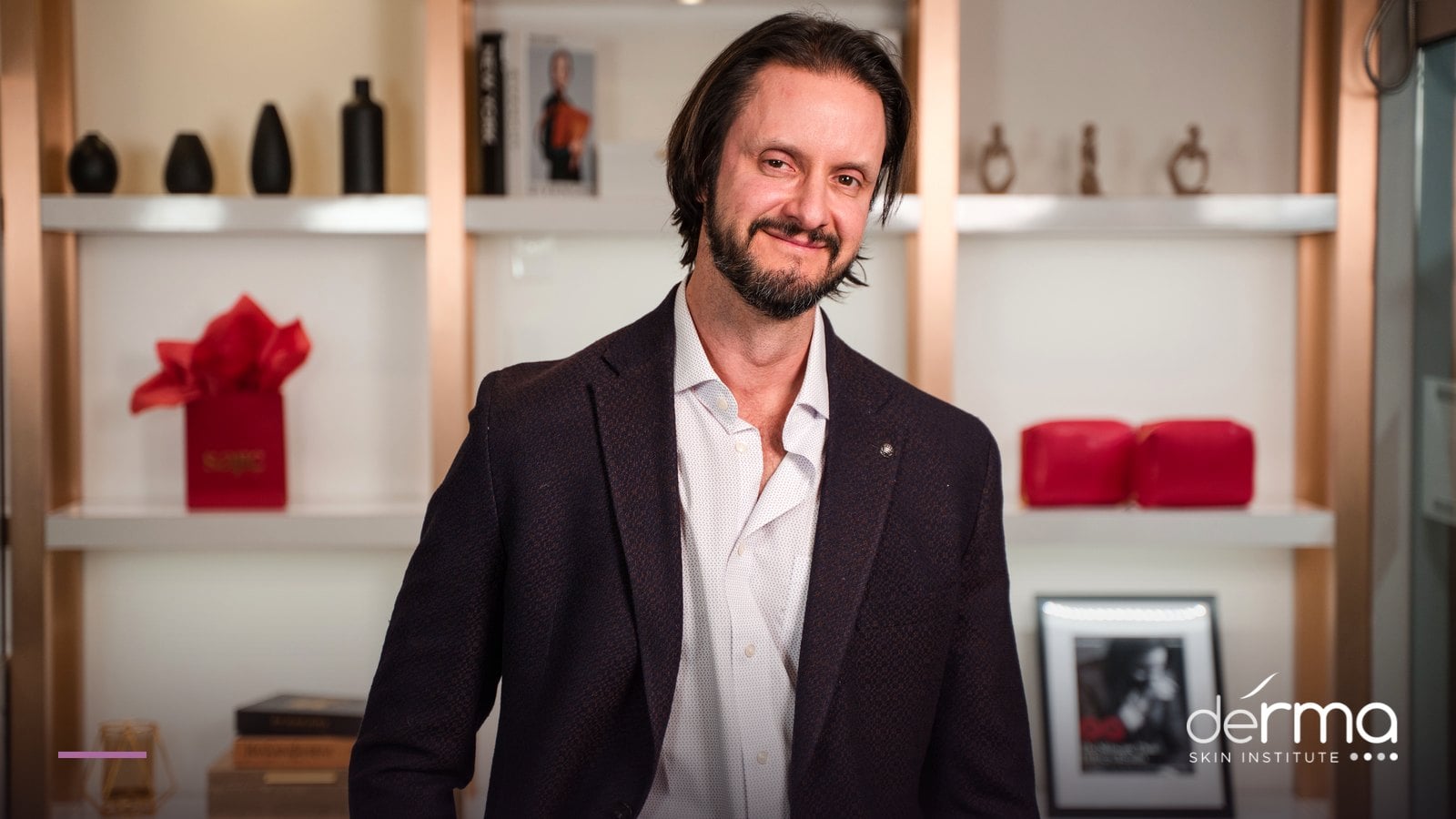
Medically reviewed by Dr. Dusan Sajic, MD, PhD — dermatologist, deRMA Skin Institute, Guelph, ON.
Sources
1. American Society of Plastic Surgeons, “2024 Plastic Surgery Statistics Report” (US procedural data), https://www.plasticsurgery.org/documents/news/statistics/2024/plastic-surgery-statistics-report-2024.pdf 2. Review of botulinum toxin mechanism of action in aesthetic medicine, Medicine, 2023, https://pubmed.ncbi.nlm.nih.gov/37499082/ 3. Onset-of-effect study of onabotulinumtoxinA for glabellar lines, 2011 (Allergan-funded), https://pubmed.ncbi.nlm.nih.gov/21197522/ 4. Glogau R, et al., pooled duration analysis of four Phase III glabellar-line trials (n=621), Dermatologic Surgery, 2012 (manufacturer-affiliated authors), https://pubmed.ncbi.nlm.nih.gov/23106853/ 5. FDA Summary of Safety and Effectiveness Data, P110033 (cheek filler pivotal trial; Allergan-funded), https://www.accessdata.fda.gov/cdrh_docs/pdf11/P110033b.pdf 6. Master M, et al., “Hyaluronic Acid Filler Longevity in the Mid-face: A Review of 33 MRI Studies,” PRS Global Open, 2024, https://journals.lww.com/prsgo/fulltext/2024/07000/hyaluronic_acid_filler_longevity_in_the_mid_face_.36.aspx 7. Narins RS, et al., randomized comparison of injectable poly-L-lactic acid versus collagen filler, Journal of the American Academy of Dermatology, 2010 (manufacturer-funded), https://www.sciencedirect.com/science/article/abs/pii/S0190962209009621 8. Histologic study of new collagen formation after calcium hydroxylapatite injection, 2018, https://pubmed.ncbi.nlm.nih.gov/29391818/ 9. Alam M, et al., “Rates of Vascular Occlusion Associated With Using Needles vs Cannulas for Filler Injection,” JAMA Dermatology, 2021 (university-funded), https://jamanetwork.com/journals/jamadermatology/fullarticle/2774505 10. Retrospective review of severe complications across 290,307 injection sites, 2025, https://pubmed.ncbi.nlm.nih.gov/40358958/ 11. Doyon VC, Beleznay K, et al., review of 511 published cases of filler-associated visual loss (1906-2023), Aesthetic Surgery Journal, 2024, https://academic.oup.com/asj/article/44/10/1091/7649223 12. Ehsani, et al., hospital case series of dermal filler complications (58 hospitalizations), Journal of Cosmetic Dermatology, 2024, https://pmc.ncbi.nlm.nih.gov/articles/PMC11845921/ 13. Health Canada, “Unauthorized ‘Nabota’ botulinum toxin may pose serious health risks” (advisory), https://recalls-rappels.canada.ca/en/alert-recall/unauthorized-nabota-botulinum-toxin-may-pose-serious-health-risks

Dusan Sajic, MD, PhD
Richard Backstein, MD

Sonja Sajic, CCPA

Toni Alberto, CCPA
With more than 20 years of experience, deRMA Skin Institute strive to offer patients the most advanced treatments available to keep their skin healthy and looking its best. Board Certified Dermatologist, Dusan Sajic, MD, PhD, board-certified Plastic and Reconstructive Surgeon, Richard Backstein, MD, FRCSC, Sonja Sajic, CCPA, and Toni Alberto CCPA are committed to providing state-of-the-art medical, surgical and cosmetic treatments to all patients in Guelph, Cambridge, Kitchener, Hamilton, Milton, and surrounding areas.
Contact Us
Fields marked * are required
If you are an existing patient inquiring about appointments and services, please contact
Guelph Cosmetic Department: (888) 803-3762 cosmetic@dermaskininstitute.com
Guelph Medical Department: (519) 836-8558 patientcare@dermaskininstitute.com